The New Frontier: AI Agents, DevSecOps, and the Re-Architecting of Software Engineering

The world of software engineering is experiencing a fundamental and rapid transformation, driven primarily by the escalating sophistication of AI coding assistants and a critical, complementary focus on embedded security and resilient architecture. In the past seven days alone, news and discussions across the tech landscape confirm that we are moving beyond simple code completion; we are now entering the era of the AI Agent, where entire development workflows are being redefined.
This shift presents a dual challenge and opportunity: achieving unprecedented developer productivity while simultaneously tackling the novel security risks introduced by fast, AI-generated code. For CTOs, engineering managers, and individual contributors alike, understanding this new dynamic is essential to future-proof careers and applications.
The Agentic Ascent: AI Moves Beyond the Co-Pilot
For the better part of two years, the conversation has centered on AI tools like GitHub Copilot as code assistants, intelligent suggestion engines that speed up routine coding tasks. Recent developments, such as new GPT-5.1 models and enhanced capabilities in competing platforms like Claude Code and xAI's Grok Code, signal a major leap.
The new focus is on AI Agents, autonomous entities that can handle multi-step, multi-file operations based on high-level natural language prompts. This is the difference between asking an AI to complete a function and asking it to "implement user authentication across the microservices layer and generate unit tests for all new endpoints."
The Rise of Vibe Coding and Flow State
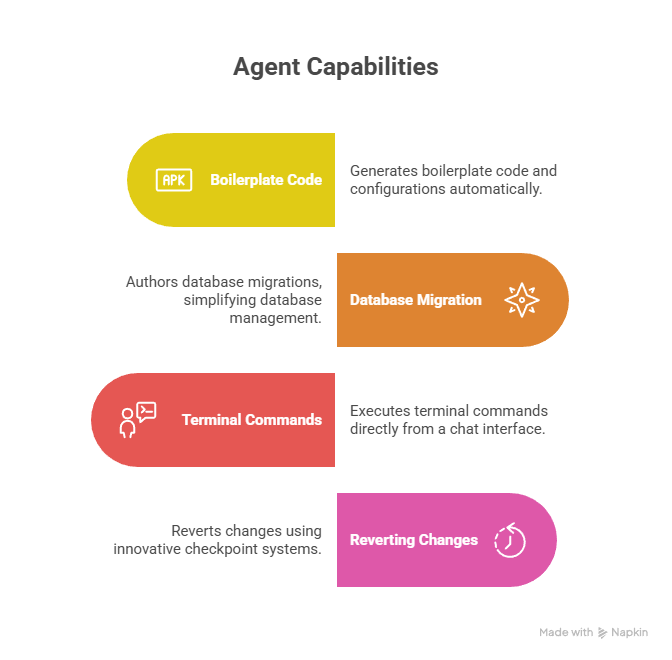
The emerging concept of "vibe coding" perfectly encapsulates this trend. Tools like Webflow's App Gen and updates to Harness's AI features are enabling developers to stay in a high-productivity "flow state." Instead of meticulously writing every line and managing low-level details, the developer can express their intention, the "vibe," and the agent handles the heavy lifting, including:
- Generating boilerplate code
- Performing database migration
- Executing terminal commands
- Reverting changes
This increase in automation is translating directly into measurable gains. Studies consistently show that developers using these advanced tools can save significant time, with some reporting over 3 hours saved per day. This is not just a marginal improvement; it's a strategic advantage that compresses delivery timelines and frees up human capital for complex architectural design and business-critical problem-solving.
The DevSecOps Reality Check: Velocity vs. Vulnerability
The breakneck speed of AI-generated code, however, has triggered a necessary and urgent DevSecOps reality check. Security is no longer an optional late-stage gate; it must be an intrinsic part of this accelerated workflow. The latest industry reports highlight a critical paradox: while a majority of practitioners believe AI tangibly improves their ability to write more secure code (e.g., faster vulnerability identification), an even larger portion acknowledges that AI coding assistants introduce new, harder-to-detect security risks.
New Security Blind Spots
The core challenge stems from how current LLMs are trained. They often prioritize functional correctness over security best practices, leading to:
- Pattern Replication: The AI may replicate common, well-documented security flaws found in its vast training data.
- Incomplete Context: A prompt that prioritizes speed might lead to code that fails to implement essential validation, error handling, or security-critical configurations.
- The "Authority Halo Effect": Developers, trusting the AI's confident output, are less likely to perform a critical security review on generated code.
The AI-Aware DevSecOps Imperative
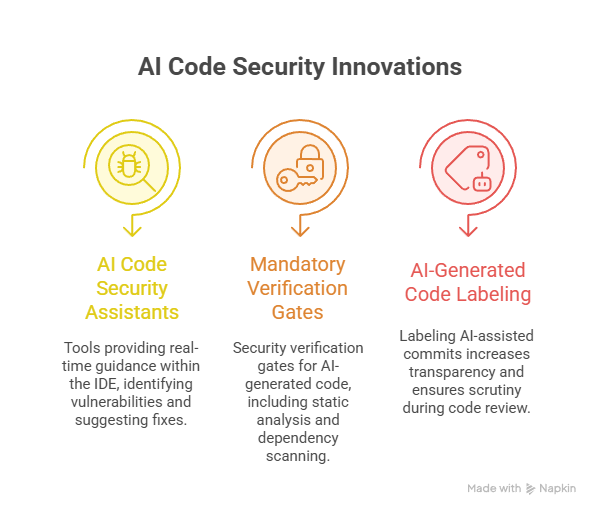
The recent industry focus is on closing this DevSecOps Trust Gap by demanding security embedded natively into developer workflows, rather than relying on another standalone tool. Key innovations driving this shift include:
- AI Code Security Assistants (ACSAs)
- Mandatory Verification Gates
- AI-Generated Code Labeling
The move is towards treating AI as both a powerful accelerator and a governed input. Engineering leaders are realizing that governance guardrails, such as clear usage policies and formal feedback loops for identified vulnerabilities, are just as important as the tools themselves.
Architectural Evolution: Cloud-Native and Microservices at Scale
Beyond AI and security, recent software engineering news underscores the continued evolution of underlying architectural practices. The industry is seeing critical lessons being shared about operating at a massive scale.
- Microservices and Kubernetes Maturity: The successful, large-scale Kubernetes migration by companies like Uber illustrates the maturity of microservices. However, discussions around the caveats like increased complexity and the need for robust observability remain central.
- The Cost of Cloud Dependency: High-profile stories, such as reports on enormous daily AWS bills, serve as a stark reminder of cloud dependency risks. This is fueling a greater interest in platform engineering and optimizing cloud-native architectures for cost-efficiency, not just scalability.
- Developer Experience (DevEx) as a Priority: Platform Engineering, which aims to create self-service internal developer portals, is gaining traction. This trend is a direct response to the need for greater velocity; by standardizing infrastructure and providing developers with a "fast lane," organizations ensure that the new AI-driven speed isn't bottlenecked by manual provisioning or inconsistent environments.
Conclusion: The Secured, Agent-Augmented Developer
The last seven days confirm that the software engineering profession is not just integrating AI, it is being restructured by it. The focus has decisively shifted from whether AI will change development to how we manage the speed, security, and scale it enables.
The next-generation software engineer will be an agent-augmented professional who leverages powerful AI tools to handle repetitive tasks, allowing them to focus on high-value, complex challenges: architectural design, security review, and deep problem-solving. Success in this new frontier will hinge on adopting AI-aware DevSecOps practices and building resilient, self-service platforms that provide the necessary guardrails for this unprecedented velocity.